



Let us simplify your medical billing.

Medical billing errors, claim denials, coding inconsistencies, and payment delays can significantly affect a healthcare provider’s financial performance. Even small billing issues can lead to lost revenue when they occur across hundreds or thousands of claims. Expert Medical Billing Audit & Denial Analysis Services in USA help healthcare organizations identify billing weaknesses, understand denial patterns, and improve their overall revenue cycle performance. A professional billing audit reviews claims, coding, documentation, payer requirements, and payment processes to identify areas that may be causing revenue leakage. Denial analysis goes a step further by examining rejected and denied claims to determine why they were not paid. Together, these services provide healthcare providers with valuable insights into their billing operations and help create a more efficient revenue cycle.
A medical billing audit evaluates the accuracy, completeness, and efficiency of the billing process from patient registration through final payment. Our Expert Medical Billing Audit & Denial Analysis Services in USA are designed to help healthcare providers identify billing weaknesses before they become recurring financial problems. A detailed audit can review patient demographics, insurance verification, authorization requirements, charge entry, medical coding, claim submission, payment posting, and accounts receivable processes. Each stage of the revenue cycle can affect reimbursement, so reviewing the complete process provides a clearer understanding of where improvements are required. Billing audits can also identify duplicate charges, incorrect patient information, missing modifiers, incorrect procedure codes, underpayments, and other issues that may delay or reduce reimbursement.
Claim denials are among the most common challenges faced by healthcare providers because they can delay payments and increase administrative workloads. A denial does not always mean that a claim cannot be reimbursed because many denied claims result from correctable errors, missing information, authorization issues, coding problems, or payer-specific requirements. Our Expert Medical Billing Audit & Denial Analysis Services in USA analyze denied claims to determine the root cause behind each denial instead of simply resubmitting claims without understanding the underlying issue. Denials can be categorized according to eligibility problems, authorization requirements, coding errors, duplicate claims, timely filing, medical necessity, missing documentation, incorrect patient information, and other factors. This classification helps billing teams identify recurring problems and prioritize corrective actions.
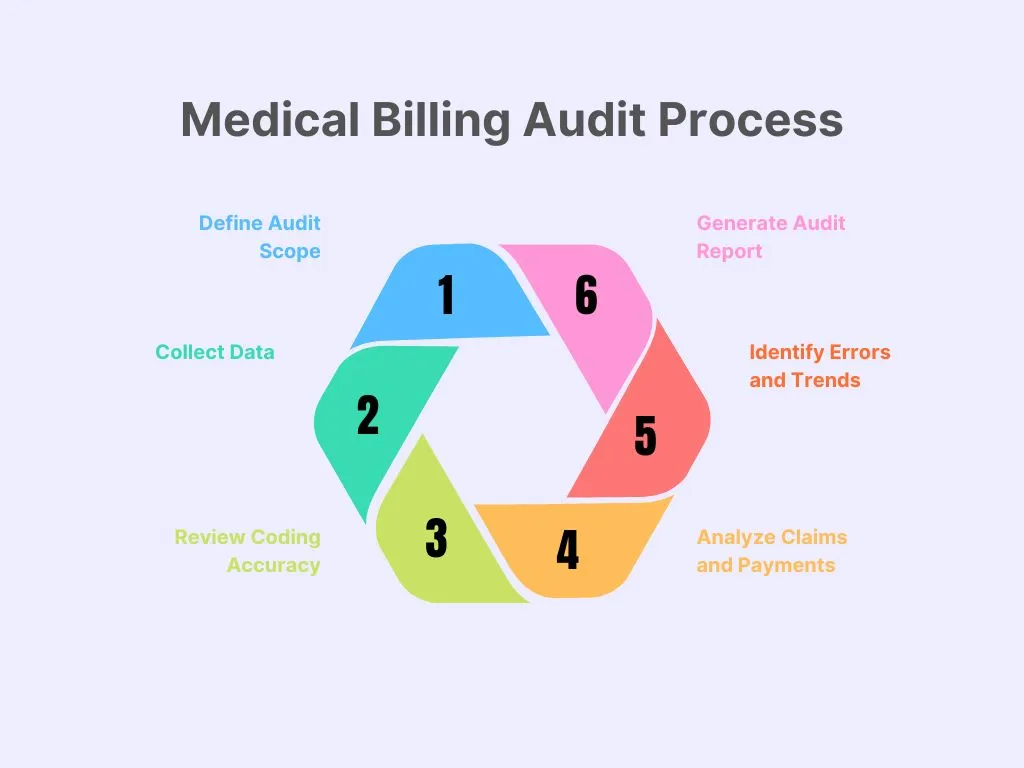
Revenue leakage can occur at multiple points throughout the healthcare revenue cycle, including missed charges, incorrect coding, claim submission errors, delayed follow-ups, underpayments, and unresolved denials. A professional billing audit can uncover these issues and determine how they affect overall reimbursement. By reviewing submitted claims, payer responses, payment records, and outstanding balances, healthcare organizations can identify opportunities to recover lost revenue and strengthen their billing procedures. For example, an audit may reveal that specific services are frequently billed incorrectly or that certain payer claims have unusually high denial rates. These findings allow providers to focus their resources on areas with the greatest financial impact while improving processes that contribute to recurring revenue loss.
Accurate medical coding is essential for proper reimbursement and effective revenue cycle management. Coding errors can result in claim delays, payment reductions, denials, and compliance concerns, making regular coding reviews an important part of a billing audit. A professional review can evaluate CPT, HCPCS, and ICD-10 coding to determine whether submitted claims accurately represent the services documented in the medical record. Documentation can also be reviewed to ensure that billed services are appropriately supported and that the coding reflects the available clinical information. The objective is to improve consistency between documentation, coding, and billing while helping healthcare organizations identify patterns that may contribute to avoidable denials or inaccurate reimbursement.
Insurance payers can have different billing rules, authorization requirements, documentation standards, reimbursement policies, and claim processing procedures. Because of these differences, healthcare providers may experience different denial patterns from one payer to another. Our Expert Medical Billing Audit & Denial Analysis Services in USA can examine denial trends by payer, provider, procedure, location, or service type to provide a more detailed understanding of claim performance. Payer-specific analysis helps healthcare organizations identify which insurance companies generate the highest number of denials and which reasons contribute most frequently to those denials. Understanding these patterns allows billing teams to improve their workflows, prepare required information more accurately, and address payer-specific issues before claims are submitted.
Simply counting denied claims does not provide enough information to solve recurring revenue cycle problems. Root cause analysis examines the processes, errors, and workflow gaps responsible for repeated denials. For example, frequent authorization denials may indicate weaknesses in the authorization process, while recurring eligibility denials may suggest that insurance verification needs improvement. Coding-related denials can indicate the need for additional coding reviews, documentation improvements, or staff training. By identifying the source of recurring problems, healthcare providers can develop long-term corrective strategies instead of repeatedly correcting individual claims. This approach can reduce unnecessary administrative work, improve claim accuracy, and help prevent the same denial reasons from appearing repeatedly.
Accounts receivable management plays an important role in maintaining healthy cash flow for healthcare practices, hospitals, clinics, and medical groups. Unresolved claims can remain outstanding for extended periods, increasing accounts receivable aging and creating financial pressure. A medical billing audit can review outstanding claims, aging reports, follow-up activities, denial queues, and collection procedures to identify areas that require improvement. This process helps determine whether billing teams are following up with unpaid claims within appropriate timeframes and whether high-value or older accounts receive sufficient attention. Denial analysis can also identify opportunities to improve appeals and resubmission processes by prioritizing claims according to their denial reason, balance, payer, age, and potential for reimbursement.
Accurate denial reporting gives healthcare providers a clearer understanding of their billing performance and financial challenges. Regular denial reports can show which issues occur most frequently, which payers contribute to the highest denial volume, and which denial categories have the greatest financial impact. Reports may include denial rates, denial reasons, payer-specific trends, procedure-related issues, outstanding balances, appeal activity, and potential recovery opportunities. These insights help management make informed decisions about staffing, training, billing workflows, coding processes, and revenue cycle strategies. Consistent reporting also makes it easier to compare performance over time and determine whether corrective actions are reducing denial volume and improving reimbursement results.
Professional medical billing audits provide healthcare organizations with a structured way to identify billing errors, reduce preventable denials, improve reimbursement accuracy, and strengthen revenue cycle processes. An independent review can provide greater visibility into problems that may be overlooked during routine billing operations. Instead of relying on assumptions, providers can use audit findings and denial data to understand where their billing processes need attention. Regular audits can also help identify workflow weaknesses before they become larger financial problems. When billing teams continuously monitor claims, payments, denials, and accounts receivable, they can respond more quickly to emerging issues and implement corrective measures that support long-term revenue cycle improvement.
The primary purpose of a billing audit is not simply to find errors but to improve the overall revenue cycle. After reviewing billing and denial data, healthcare organizations can develop practical corrective action plans based on their specific challenges. These actions may include improving insurance verification, strengthening authorization procedures, reviewing coding practices, enhancing documentation workflows, improving claim scrubbing, monitoring payer requirements, and establishing more effective denial follow-up procedures. Continuous monitoring can help organizations identify whether these improvements are producing measurable results. A proactive approach allows healthcare providers to address problems earlier, reduce unnecessary rework, and create a more consistent billing process that supports timely and accurate reimbursement.
Healthcare providers need accurate and efficient billing processes to maintain financial stability while continuing to focus on patient care. Professional audit and denial analysis services provide an objective evaluation of billing operations and help identify opportunities for improvement. Our Expert Medical Billing Audit & Denial Analysis Services in USA focus on identifying the causes behind billing problems and developing practical solutions that support stronger revenue cycle performance. From coding and documentation reviews to payer-specific denial analysis, accounts receivable assessment, and denial trend reporting, each important part of the billing process can be evaluated. Detailed findings and actionable recommendations can help healthcare organizations make informed decisions and improve the effectiveness of their billing operations.
Unresolved billing errors, recurring denials, delayed claim follow-ups, and inaccurate coding can gradually reduce a healthcare organization’s revenue and increase administrative workloads. A structured medical billing audit and denial analysis process provides the information needed to identify these problems and address them effectively. Expert Medical Billing Audit & Denial Analysis Services in USA can help providers understand billing performance, uncover revenue leakage, analyze denial patterns, identify workflow weaknesses, and improve claim management. By taking a proactive approach to audits and denial analysis, healthcare organizations can strengthen their revenue cycle and establish more efficient financial processes. Whether a practice is experiencing increasing denials, growing accounts receivable, coding inconsistencies, or unexplained reimbursement losses, a professional audit can provide valuable insights and support continuous improvement.


Legacy Billing Solutions provides professional healthcare billing services tailored to behavioral health providers. Our reliable revenue cycle management solutions reduce administrative workload, improve financial performance, and support long-term operational success. We focus on accuracy, compliance, and timely reimbursements to ensure steady cash flow and long-term financial stability for your practice.
©2026 Legacy Billing Solutions. All Rights Reserved.